Sustainability isn’t about perfection. It’s about better choices.
Sustainability if often framed as an all-or-nothing pursuit. Ideally, we should avoid using resources altogether. In fact, “avoid” sits at the top of the waste hierarchy for good reason. But in reality, avoiding use entirely isn’t practical. We need clothes. We need products. We need tools for daily life.
The more useful question is not whether we should use things, but how we choose to make and use them.
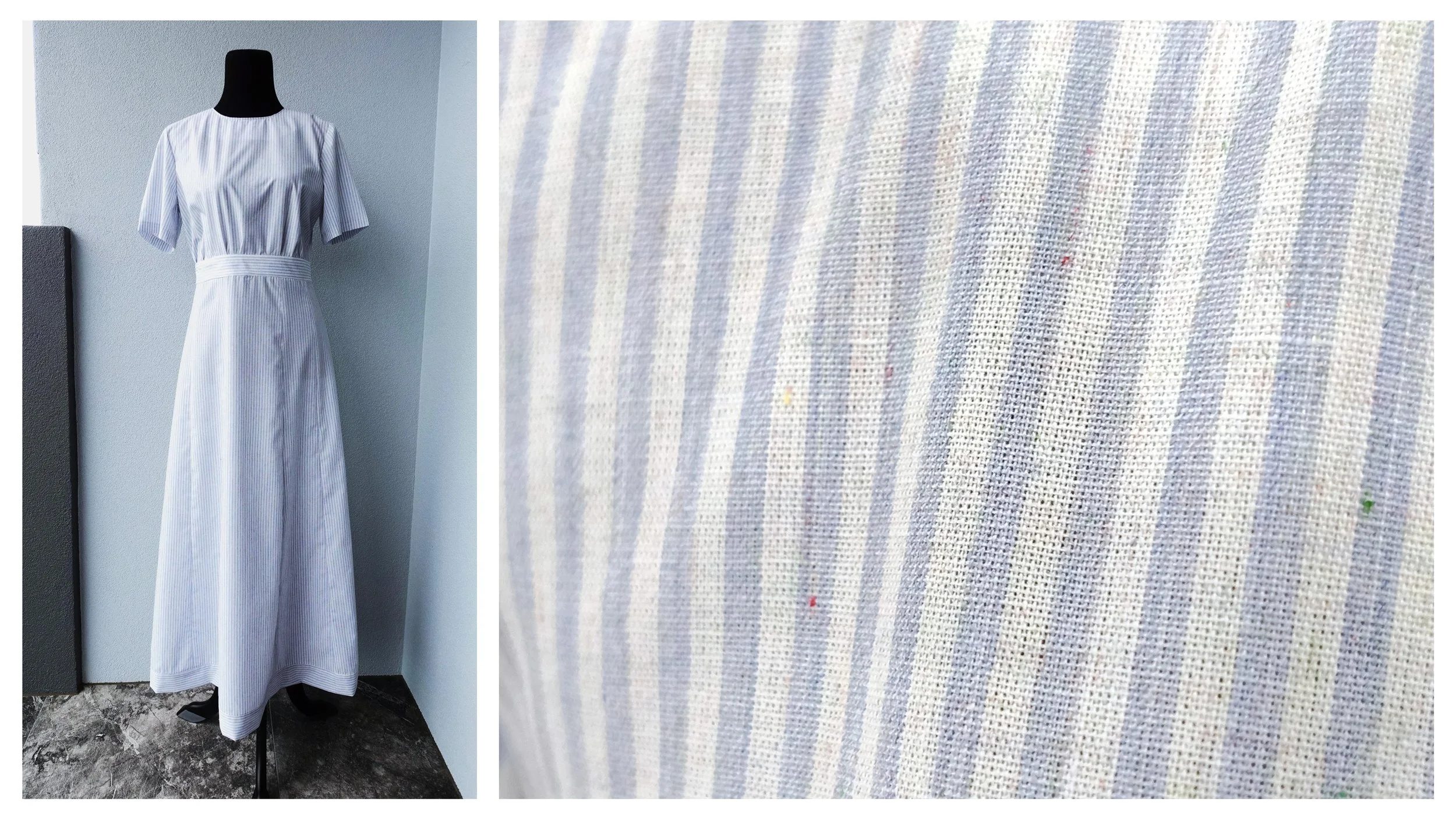
I recently finished making a dress, and what makes it special isn’t the design or the cut. It’s the fabric.
The fabric is made from 50% recycled cotton and 50% virgin cotton. If you look closely, you’ll notice small coloured specks scattered throughout the fabric. Traditionally, these might be labelled as “flaws” which are remnants of different coloured fibres and yarns that are incorporated during the recycling process.
I see them differently.
Those specks are visible proof that recycled material is actually present in the fabric. They tell the story of where the mateiral has been and how it has been transformed. To me, they represent honesty in manufacturing rather than imperfection.