Designing Packaging for the Real World (not the Ideal One)
When people talk about sustainable products, they usually think about materials, manufacturing or carbon footprints. Packaging rarely gets the spotlight, yet it’s one of the most visible and impactful parts of the customer experience.
At Circlely, I’ve learned that sustainable packaging isn’t about choosing what sounds best on paper. It’s about designing for how people actually behave, how recycling systems actually work, and what’s realistically available – not what’s theoretically perfect.
Designing for ease, not effort
If recycling requires extra steps like peeling labels, separating materials, guessing what goes where…most people simply won’t do it. That’s not a criticism; it’s human nature. So instead of designing packaging that relies on ideal behaviour, I focus on packaging that works by default.
That’s why Circlely packaging is:
· Paper-based wherever possible
· Shipped in recyclable cardboard boxes
· Sealed with paper tape (so nothing needs to be removed)
· Made using FSC-certified and recycled-content materials where available
The goal is simple…make the sustainable option the easiest option.
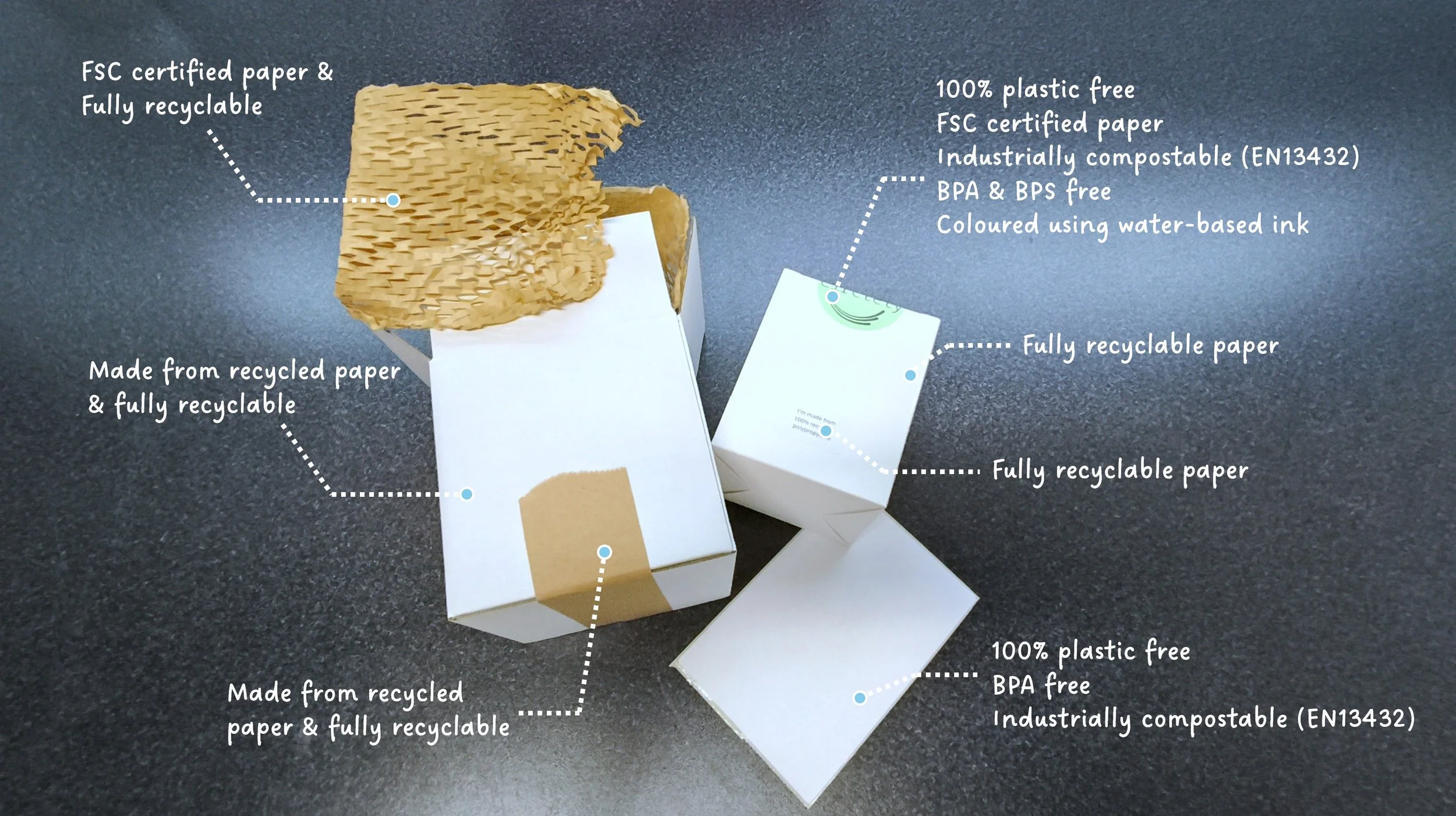
A range of our selected sustainable packaging materials
Working within real-world constraints
Some packaging components (like shipping labels and stickers) are still industry-standard. While compostable or specialty alternatives exist, many require industrial composting facilities that most customers don’t have access to, which can unintentionally shift materials from recycling to landfill.
Rather than chase perfect-sounding claims, I prioritise:
· What customers can realistically recycle at home
· What works within existing infrastructure
· What causes the least friction in real use
This means choosing the best available options today while actively testing better ones for tomorrow.
Every packaging run becomes feedback.
Every limitation becomes a design problem.
Every decision is a trade-off and an opportunity to do better next time.
Instead of waiting for perfect solutions, I’ve chosen to build something workable now, and improve it as better materials. Systems, and technologies become available.
Progress over perfection
There’s a lot of pressure in sustainability to get everything 100% right from day one. But real impact doesn’t come from perfection. It comes from momentum.
This is very much a work in progress and I’m committed to continuing to learn, test and evolve.
Because sustainability isn’t a destination.
It’s a design process.